

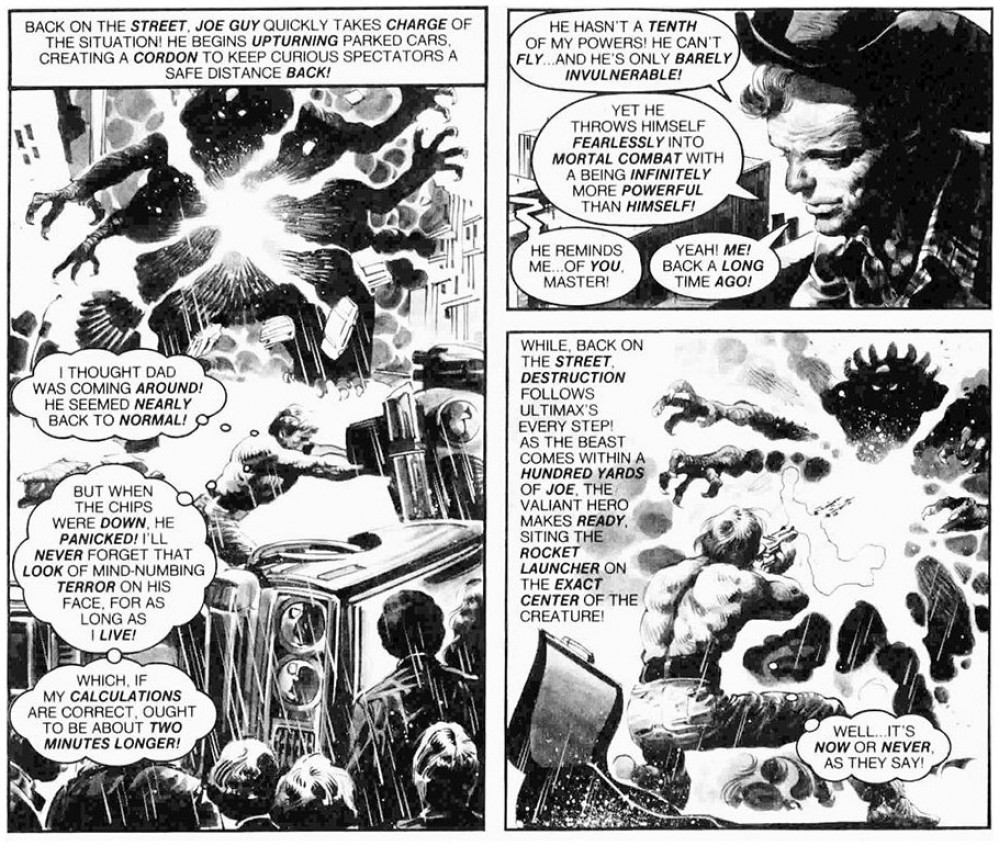
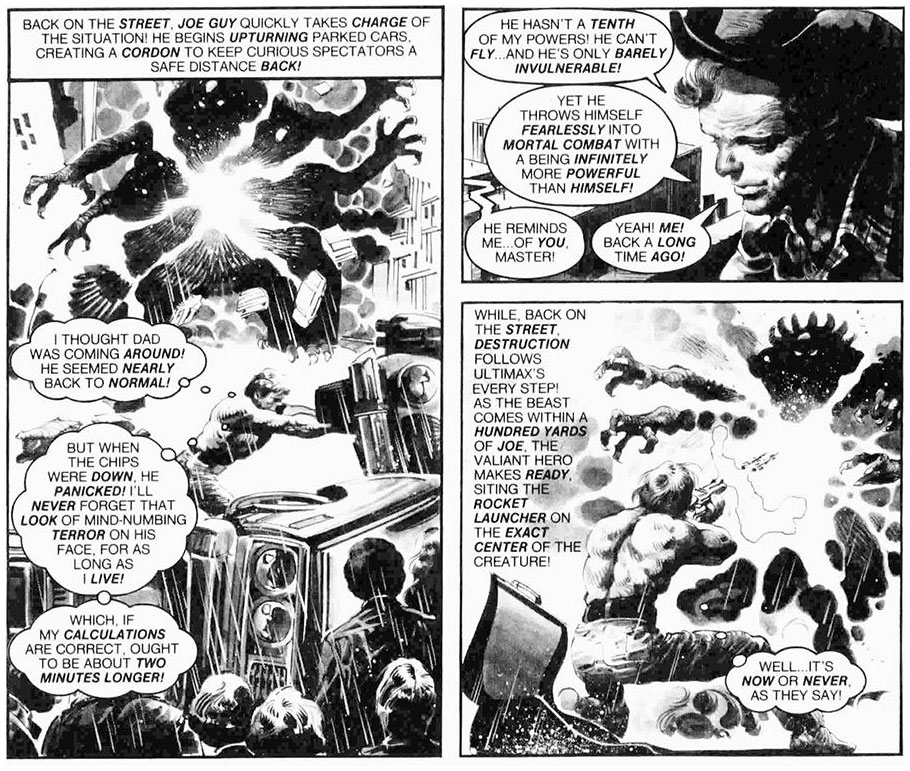
'Joe Guy, America's Foremost Hero!' (The Rook #10).
Abel Laxamana was a Filipino comic artist who, in the late 1970s and 1980s, drew romance and horror stories for Wow Komiks and Super Action Pocket Komiks in his home country, before becoming in demand in the US comic book and animation industries. During the early 1980s, he drew comics for Warren Publishing's magazines, of which 'Joe Guy, America's Foremost Hero!' (1981-1982) in The Rook Magazine was the most notable. In the latter half of the decade, well into the 1990s, he drew celebrity and TV-based comics for Blackthorne Publishing, while working for the animation studios DIC, Cartoon Network and Marvel Animation. In the 1990s and 2000s, Laxamana drew 'Radioactive Man' stories for Bongo Comics, a spin-off based on the superhero parody from Matt Groening's 'The Simpsons'.
Life
Not much is known about Abel P. Laxamana's personal life. He was born in 1938 in San Fernando, Pampanga, on the Filipino isle of Luzon. He later moved to the USA, where he died at the age of 83 in August 2021 in Moreno Valley, Riverside County in California.

'Isang Hindi Kilalang Tao'.
Filipino comics
In the early 1970s, Laxamana made his name in the Filipino comics industry, with his earliest work appearing in Wow Komiks Magasin (Soler Publishing House). At Soler, he frequently collaborated with the veteran comics writer and movie director Mike Ron Makiling. Early Laxamana stories like 'Isang Hindi Kilalang Tao' ("An Unknown Person", written by Reymundo Aure) revealed influences from the illustrator Arturo Jongko and fellow Soler artist Floro Dery. Later, he broke away from this style, while his artwork showed more influences from Alex Niño.
In the mid-1970s, he made cover illustrations for Rading Mina Sabater's Badiao Publications, which published the one-shot comic book series Puro Wakas Komiks Magasin. When Abel Laxamana joined Affiliated Publications, he illustrated the novel 'Nabag na Pader' ("Broken Wall"), published in Superstar Comics in 1975, and 'Kahit Abutin Mo Ang Langit' ("Even If You Reach the Heavens"), written by Jun Tolentino and published in United Super Stories in 1976. In 1977, he also drew the story 'The Prick', written by Perd Liwanag and published in United Super Stories in 1977.
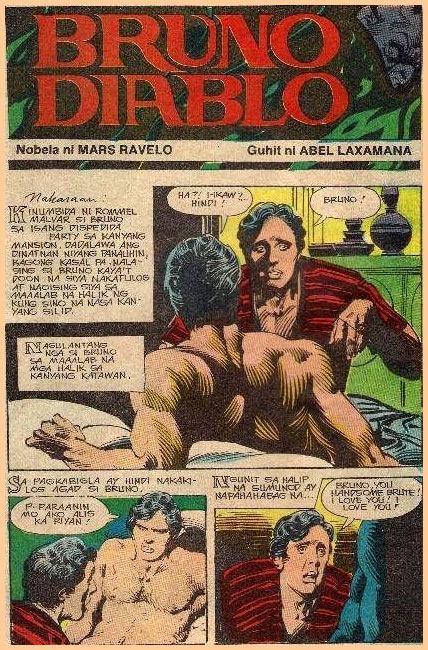
'Bruno Diablo'.
Although Laxamana was already working for foreign comics in the late 1970s, he continued to draw for various local comics publications, collaborating with many well-known comic writers and novelists. Together with scriptwriter Pablo S. Gomez, he made several romance comics, including 'Lilak Bulaklak ng Magdamag' ("Lilac Flower of the Night", 1981) in Teens Weekly Komiks of Graphic Arts Service, Inc. This work was later loosely adapted into the live-action film 'Bulaklak ng magdamag' ("Flowers of the Night", 1985), directed by Emmanuel H. Borlaza and produced by Regal Films. With the legendary Filipino comic writer and artist Mars Ravelo, Laxamana worked on 'Bruno Diablo' (1983) for Gem Komiks, as well as the immortal love story 'Maruja'. He also drew 'Lahing Asuwang' (1984) in Holiday Komiks, 'Laserman' for Super Action Pocket Komiks (with writer Daddy S. Gomez, 1985) and the superheroine 'Olga', published by Rex Publication.
Because at the time there were a great many Filipino comic books in production, there was a high supply and demand. Veteran artists constantly hired assistants to help them out. Since the pay remained low, Laxamana concluded that, in other to survive financially, he had to draw as many stories as possible and, above all, work extraordinarily fast.
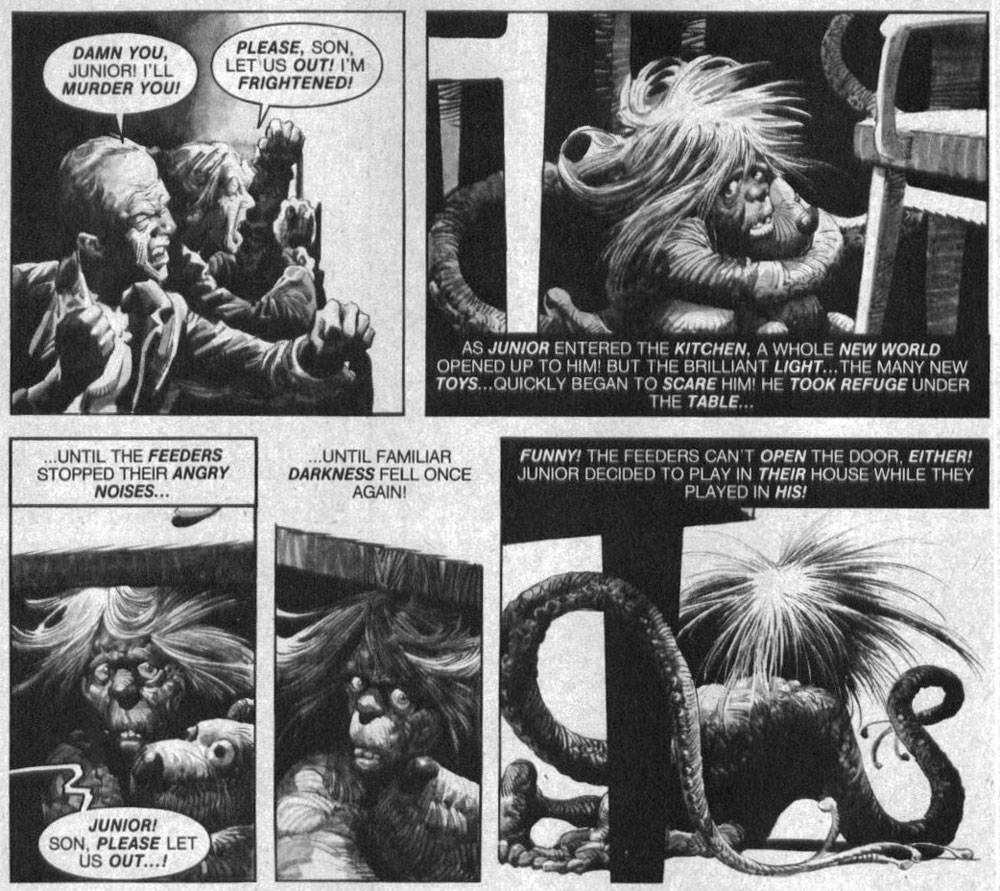
'Junior' (Creepy #133).
Warren magazines
In the late 1970s, Laxamana was part of the last wave of Filipino comic artists to find work with US comic book companies to draw realistic comics for their books and magazines. Between 1978 and 1983, his art appeared alongside that of Alex Niño, Rudy Nebres and Alfredo Alcala in the horror and adult fantasy magazines published by Warren Publishing, such as Creepy, Eerie, The Goblin, The Rooker, Vampirella and 1984 (later renamed to 1994). He mostly drew one-shot stories, but also had stints on sci-fi features like 'Rex Havoc & The Asskickers of the Future' with writer Jim Stenstrum in 1984 (1979), and 'Baby Makes Three!' with Kevin Duane in 1984's follow-up, 1994 (1980). With Jim Stenstrum, he also worked on 'Joe Guy, America's Foremost Hero!' in The Rook Magazine (1981-1982) and with writer Timothy Moriarty, he produced 'Wizard Wormglow' in the short-lived title The Goblin (1982), the latter two being more tongue-in-cheek parodies of the sci-fi/fantasy genres.
Of all his Warren work, his five stories with 'Joe Guy' are probably the best remembered. The hero-for-hire "without equal in daring rescues, dispelling alien invasions and thwarting master criminals" was a spoof on sci-fi action movies and mocked all the clichés in the genre.
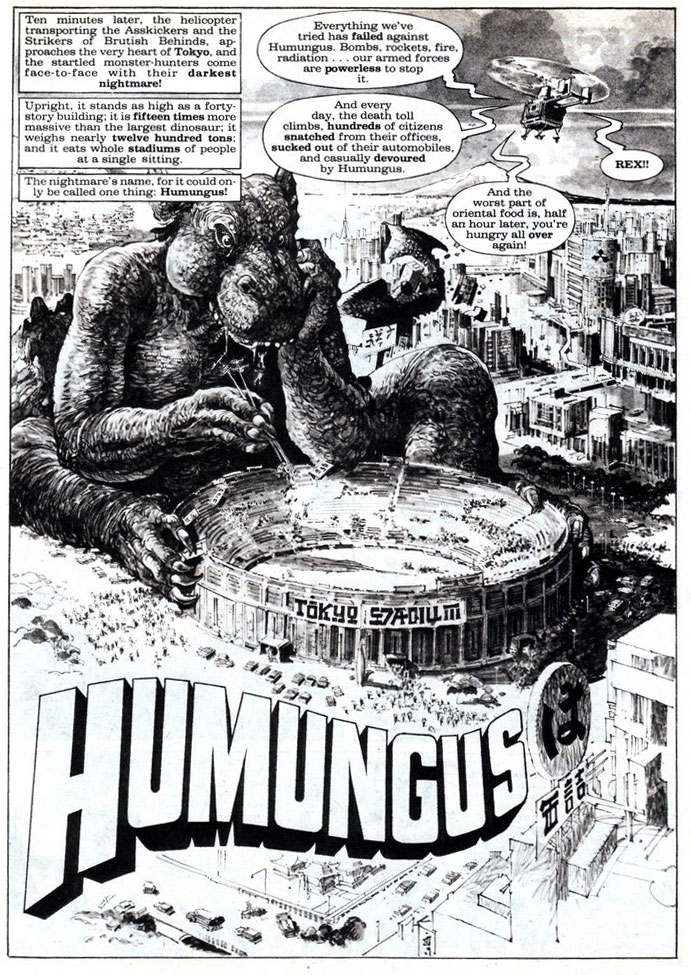
'Rex Havoc & The Asskickers of the Future' - Humungus (1984, #9, October 1979).
Blackthorne Publishing
When work for Warren declined by the mid-1980s, Laxamana returned to Filipino comic books, before landing new US jobs through Blackthorne Publishing. Laxamana was one of the artists working on the comic book series based on the futuristic 'BattleTech' franchise (1987-1988) and also for the horror title 'Werewolf' (1988-1989), based on the NBC television series of the same name.
At Blackthorne, Laxamana notably provided the artwork for 'Moonwalker' (1989), a comic book based on the film of the same name starring Michael Jackson (which had production design by Mike Ploog). At the time, Jackson was easily the most popular and lucrative pop star on the planet, so Blackthorne invested a lot of time, energy and money in this licensed project. The comic book was presented in 3-D and had to be read with special 3-D glasses, which came with each copy. Unfortunately, 'Moonwalker' was not released in theaters, but went straight-to-video. If that didn't hurt the book's sales enough, the picture also received bad reviews, since the plot was stringed together with music videos and compilations thereof, leaving an overall chaotic impression. The 'Moonwalker' comic book flopped and drove Blackthorne into bankruptcy. All unsold copies were destroyed, making the item a rare collectors' item today. Around the same time, Rick Tulka also made an illustrated book based on 'Moonwalker', although this was a coloring book published by Methuen.
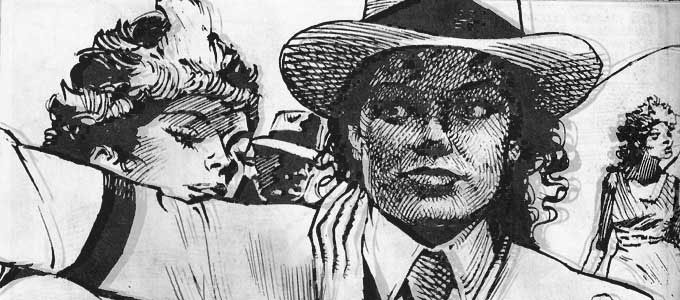
'Moonwalker', starring Michael Jackson.
Animation
By the 1980s, the Filipino artists were also in demand at US animation studios. Laxamana worked as a background painter and color stylist for DIC, a studio specialized in animated shows based on toy franchises, TV shows, video games and other popular child or teen-oriented media. He helped out with 'C.O.P.S. (1988-1989), 'The Super Mario Bros. Super Show!' (1989), 'The Real Ghost Busters' (1988-1990), 'Swamp Thing' (1990), 'New Kids on the Block' (1990), 'G.J. Joe' (1990-1991), 'Captain Planet and the Planeteers' (1991-1992) and 'Sonic the Hedgehog' (1993). For Andrews McMeel Publishing, he also illustrated 'The Pop-Up Book of Captain Planet and the Planeteers' (1992).
As a storyboard artist, Laxamana lent his services to Murakami Wolf Swenson's 'James Bond Jr.' (1991), Universal's 'Exosquad' (1993), Graz Entertainment's 'Skeleton Warriors' (1994-1995), Cartoon Network's 'The Real Adventures of Jonny Quest' (1997) and Marvel's 'X-Men' (1992-1996) and 'The Incredible Hulk' (1997).
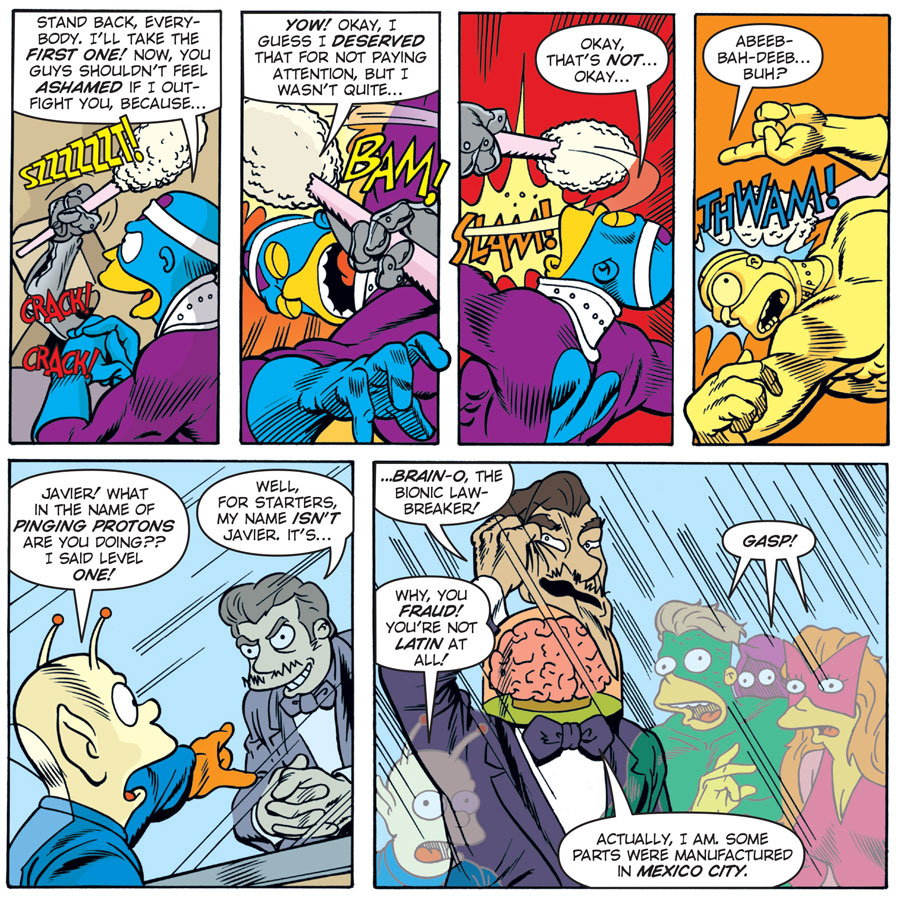
Radioactive Man - 'Risky Be the Rumpus Room' (Radioactive Man #7, June 2003).
Bongo Comics
In 1994, Laxamana found work with the newly established comic book company of 'Simpsons' creator Matt Groening, Bongo Comics. There, he mostly worked on spin-off stories based on 'Simpsons' side characters. In 'Itchy and Scratchy Comics' (March 1994), he provided additional artwork to the story 'The Itchy & Scratchy Movie II', scripted by Deb Lacusta and Dan Castellaneta (best-known as the voice actor of Homer Simpson) and drawn by Steve Vance and Bill Morrison.
Laxamana mostly worked on stories starring Radioactive Man, a parody of superhero comics that debuted in the TV episode 'Three Men And A Comic Book' (1991), in which Bart, Millhouse and Martin Prince buy a rare copy of the first volume of Radioactive Man explaining the character's origin story. Pages from this non-existent volume were only shown briefly in the episode, but for the January 1994 debut issue of Bongo's Radioactive Man comic book, Bill Morrison, Steve & Cindy Vance expanded on the idea and turned it an actual comic book story: 'The Origin of Radioactive Man' (January 1994), again with additional artwork by Laxamana. The same issue also contained 'Dr. Crab's Commie Comics', a satire of the 1950s witch hunts against comics by Dr. Fredric Wertham, complete with a cameo by Mad Magazine publisher William M. Gaines. In 1995, Laxamana provided the inking for the short time travel story 'The Radioactive Man of 1995!', written by Bill Morrison and penciled by Sharon Bridgeman in Bongo's 80-page 'Radioactive Man' special.
After a considerable hiatus, Laxamana drew another 'Radioactive Man' story, 'No One Gets Over the Underground' (March 2001), written by Batton Lash. A pastiche of 1970s comics and pop culture, it marked the first time Laxamana drew 'Radioactive Man' completely on his own. His final story was 'Risky Be the Rumpus Room' (May 2003), written by Jesse McCann, starring the Superior Squad (a parody of the 'Super Friends').
Apart from comics, Laxamana also contributed illustration work for the 1995 'Simpsons Fun' calendar and 'The Simpsons Guide to Springfield' (1998).
Recognition
In 1979, Abel Laxamana received a Warren Award for "Best All-Around Artist". In 2002, he won an Eisner Award for "Best Humor Publication", as part of the creative team of Bongo's 'Radioactive Man'.

1979 Warren Awards winner Abel Laxamana in the spotlight in Creepy #119 (1980).